Optimizing Trade Entries with the Slow Stochastic Indicator
In the volatile landscape of financial trading, timing is everything. While many indicators focus on the direction of a trend, few provide the granular insight into entry and exit points like the Slow Stochastic Oscillator. Originally developed by George Lane in the late 1950s, the Stochastic remains one of the most reliable momentum indicators used by professional traders to identify overbought and oversold market conditions.
What is the Slow Stochastic?
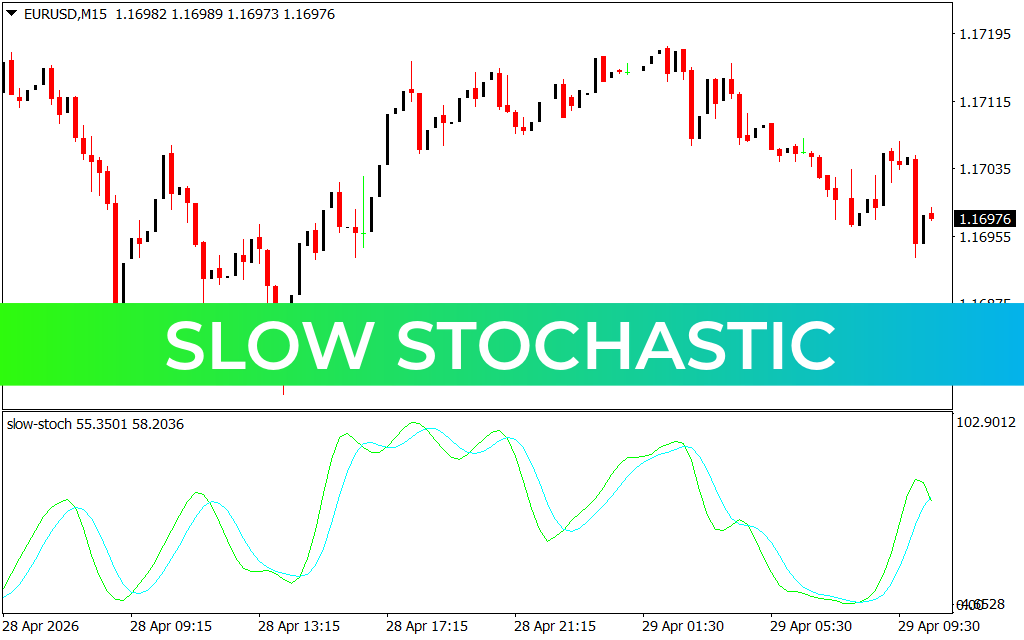
The Stochastic Oscillator measures the relationship between a security's closing price and its price range over a specific period. The "Slow" version of this indicator is a derivative of the Fast Stochastic, smoothed by a moving average (typically a 3-period SMA). This smoothing process is vital because it filters out market "noise" and erratic spikes, providing a clearer, more stable signal for traders who prefer reliability over raw speed.
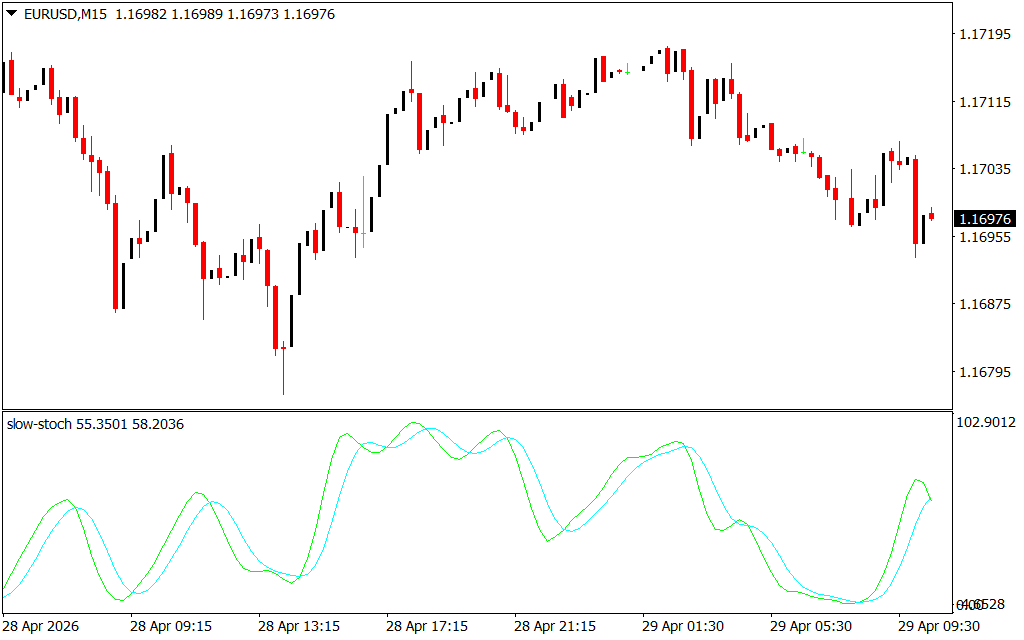
The indicator consists of two lines: %K (the main line) and %D (the signal line). These fluctuate between a scale of 0 and 100.
Key Trading Signals: Overbought vs. Oversold
The primary utility of the Slow Stochastic lies in its ability to highlight price extremes:
- Overbought (Above 80): When the lines rise above the 80 level, it suggests the asset may be overextended to the upside. This often serves as a warning that a bearish reversal or consolidation is imminent.
- Oversold (Below 20): Conversely, a drop below the 20 level indicates that selling pressure may be exhausted, signaling a potential bullish turning point.
However, savvy traders don't just sell at 80 or buy at 20. The most powerful signals occur when the %K line crosses the %D line while inside these extreme zones, confirming a shift in momentum.
The Power of Divergence
One of the most effective ways to use the Slow Stochastic is by identifying divergences. A bullish divergence occurs when the price makes a new lower low, but the Stochastic forms a higher low. This indicates that despite the falling price, selling momentum is actually slowing down—a classic precursor to a Trend Reversal. Identifying these patterns on timeframes like the M15 can give scalpers and day traders a significant edge.
Integrating Slow Stochastic into Your Strategy
To maximize accuracy, the Slow Stochastic should rarely be used in isolation. It performs best when paired with trend-following tools like Moving Averages or Support And Resistance levels. For instance, in a strong uptrend, traders often ignore overbought signals and instead use oversold dips as high-probability "buy the rumor" entries.
Conclusion
The Slow Stochastic is a staple for a reason: it balances sensitivity with stability. By smoothing out the volatility of the market, it allows traders to see the underlying momentum shifts that precede price movements. Whether you are trading Forex, stocks, or commodities, mastering this oscillator is a foundational step in building a disciplined trading system.
2 Downloads
Last Update:
Apr 29, 2026 13:34 PM
Published:
Jan 31, 2026 02:44 AM
Category: